To read more context for the letter below, check out this post here:)
Dear Pilgrim,
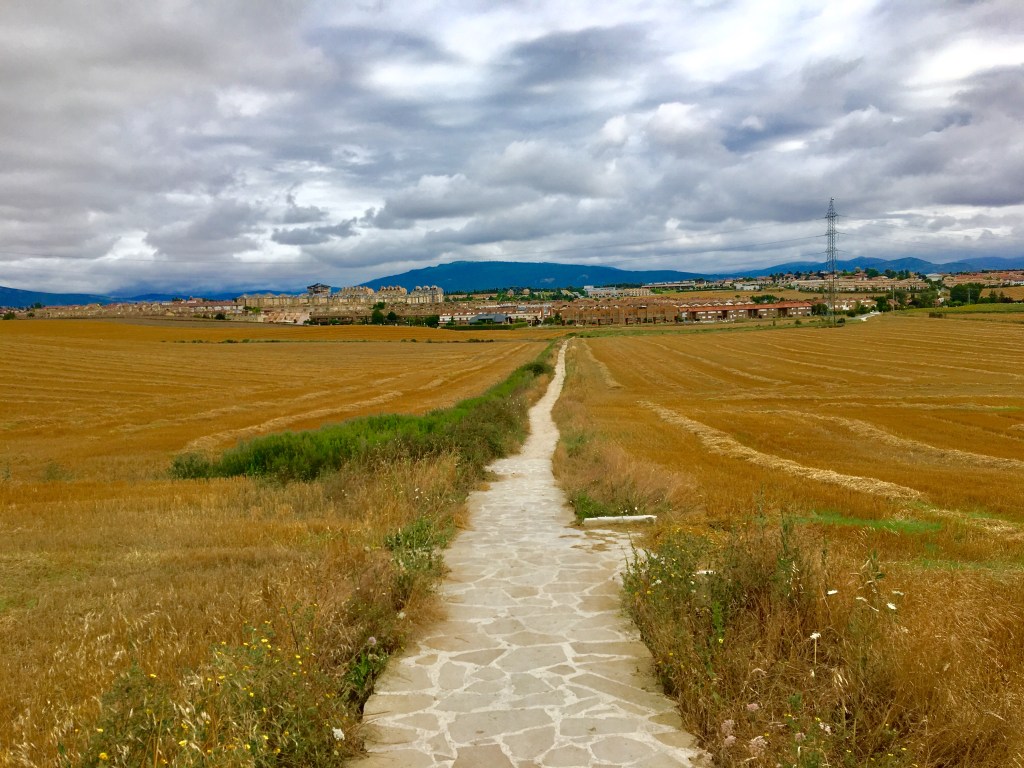
You’ve made it past the Pyrenees; past the anticipation of the first steps. Ahead of you sit the Basque hills of Navarra and the fertile vineyards of La Rioja. This is when your feet begin to set their preferred pace. These are precious days, the days without time. There is much road ahead and enough road behind to sink into this new way of life.
Remember, just days ago, you arrived here with no idea of what to expect outside of guidebooks and anecdotes. It’s time to be curious about when you like to wake up and when you like to go to bed. You get to decide the best time for breakfast, second breakfast, lunch, and dinner. Find the drinks and food that bring you back from the edge of exhaustion—a can of Aquarius, a Maxibon popsicle, a glass of wine, an oversized slice of potato tortilla overflowing with cheese.
Try not to think about the distance ahead of you. Santiago is only an vision in your imagination at this stage, not somewhere on a map. Practice taking your walk hour by hour or minute by minute. You only need to get over the next hill or around the next curve. The rest is tomorrow’s business.
The villages just beyond the Pyrenees, primarily through the province of Navarra, are spaced in such a way that you’ll spend most days with the same people. Don’t be afraid to set your own course and stay in albergues outside of those suggested by the office in St. Jean. If this means you separate from your early Camino family, don’t fret, you will see them down the road if you’re meant to. It’s easy to push yourself too hard during the initial days of walking—to convince yourself that staying the course and keeping up with the crowd is more important than listening to the voices coming from your knees and your feet. Listen to them. Rest. There is time.
Pamplona is the first small city on the path and it’s worth exploring if you have the time. Be aware that just beyond the city, there is a significant incline that’s easy to discount. Hiking up the Alto de Perdon may not require as many miles, but its incline is substantial, especially without shade or a place to rest.
Beyond the mountain, Romantic stone villages surround themselves with climbing vines and 1,000-year-old bridges carry you over the rivers that surround them. Visit the ancient cathedrals, take the scenic routes that bring you to ancient monasteries, and stop for a glass of wine at the pilgrim fountain just beyond Ayegui.
The path leading up to Los Arcos can be dangerous when attempted without extra water. There will be several hours without shelter, food, or water unless you happen upon the kindness and good timing of a food truck.
If you break the Camino into thirds, Burgos tends to mark the end of the first chapter. The sight of recognizable store brand names, large crowds of tourists, and the constant glares can be off-putting after so much time among the trees and stones. Try not to mourn the sanctity, you will have plenty of space for silence the moment you walk beyond the city. Absorb the energy of Burgos and let it fuel you forward. Celebrate how far you’ve come.
 Maybe There Will Be Cupcakes
One response to “5. Dear Pilgrim: On Navarra Through Burgos”
[…] 5. On Navarra Through Burgos […]
LikeLike