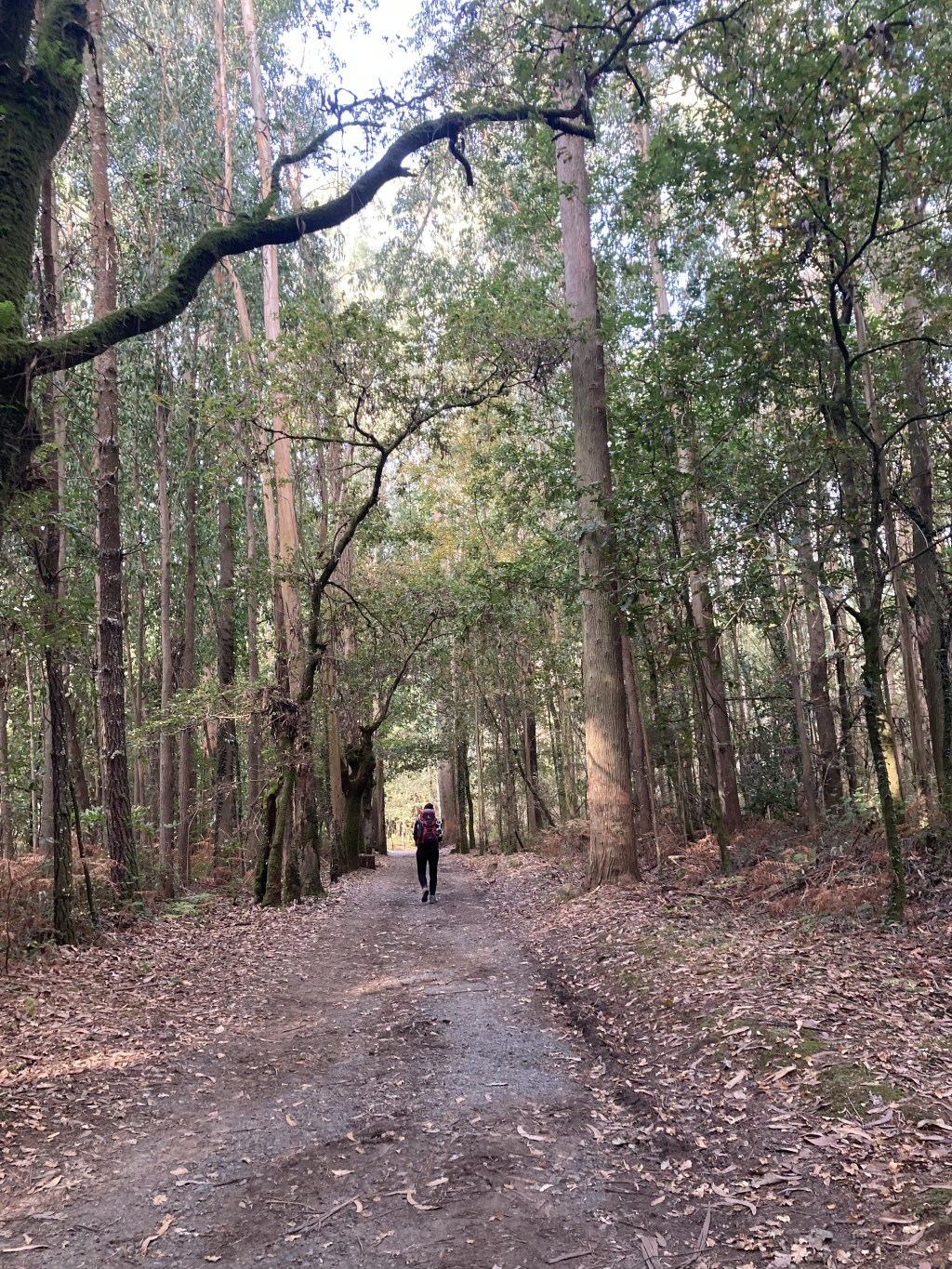
To read more context for the letter below, check out this post here:)
Dear Pilgrim,
On the eve of a cousin’s wedding, an in-law clutched her glass of wine and spat out, “I could never do a thing like that.”
She cocked her head and took another moment to consider what it might be like to walk 500 miles. And then, much like someone contemplating a month in a high-security prison, shook her head and then nodded, as if applauding herself. “I’m glad I’m not you!”
I’m fascinated by the brand of terror that engulfs people when I tell them about the Camino de Santiago. Sure, you’d expect concerns about safety, money, time, or physical ability. But much more commonly, listeners tend to unravel into a line of questioning that uncovers their buried, shadowed fears, those of embarrassment, distrust, and assumptions about who is worthy to take such a trip.
“What if I don’t know what I’m doing?”
“I could never leave my husband for that long.” (oof)
“Can I bring my laptop to get work done?”
“What if I have to give up and go home?”
“People will think I’m too old.”
The pastor of a church once revealed to me that he’d been spiritually called to the Camino, but with a pat on his belly, he stated, “I could never go because of this.”
The journey of a pilgrim is not designed to be easy, and it’s not designed to be comfortable. And while the road may be solitary at times, the journey is as universal as the rituals that make up our lives—the weddings, the funerals, the birthday candles. In the end, the priest, the CEO, and the actor will all face the same road. They all must wake up in the early hours of the dark morning, tend to their wounds, and take off into the same sun, wind, rain, and ice.
When you must put one foot in front of the other, there’s little time to think about the once-in-a-lifetime fears that could happen to you anywhere. And there’s even less time to think about the way we once did our makeup, sucked in our stomachs, or made sure to cook dinner before our spouse got home.
The true challenge comes from the culmination of days, steps, and moments of vulnerability that force you to question whether you’re willing to face another minute of all this. Let’s be real. Blisters may bloom on your heels, toes, bunions, upper arms, and inside of your thighs. Blisters may grow on top of old blisters. You may get sunburn, heat rash, and red welts from plants that you didn’t know you touched. You might have a stomachache from eating too much ham and walk in the sun with a red-wine hangover. You might encounter farm dogs, horses, sheep, and wild boars.
But there is another side to the story. You will share muscle cream, ibuprofen, wine, and ankle braces with people you’ve known for 12 hours. You will have the most refreshing sip of soda of your life and hand the bottle to the person across the table to share the experience. You will cry to strangers and strangers will cry to you. You will trudge up mountains in the mud and the sideways rain in concentrated silence with someone who respects that silence. You will sing with nuns of someone else’s religion and receive blessings from the wrinkled sages of mountain villages.
You will go to bed with muscle cramps and swollen knees and sore shoulders and the knowledge that you did—after so many years—go on a true adventure. You will wake up ready to do it again knowing that without these things, you’d be home back on your couch dreaming about a day when you can face all these dangers again. You’d be back home telling someone with great certainty that you could never do a thing like that.
 Maybe There Will Be Cupcakes
3 responses to “2. Dear Pilgrim: On Wild Boars & Other Dangers”
Oh Gini, this makes me so nostalgic! I hope you’re well, old friend!
LikeLiked by 1 person
Thank you!! Same to you darling!!
LikeLiked by 1 person
[…] 2. On Wild Boars and Other Dangers […]
LikeLike